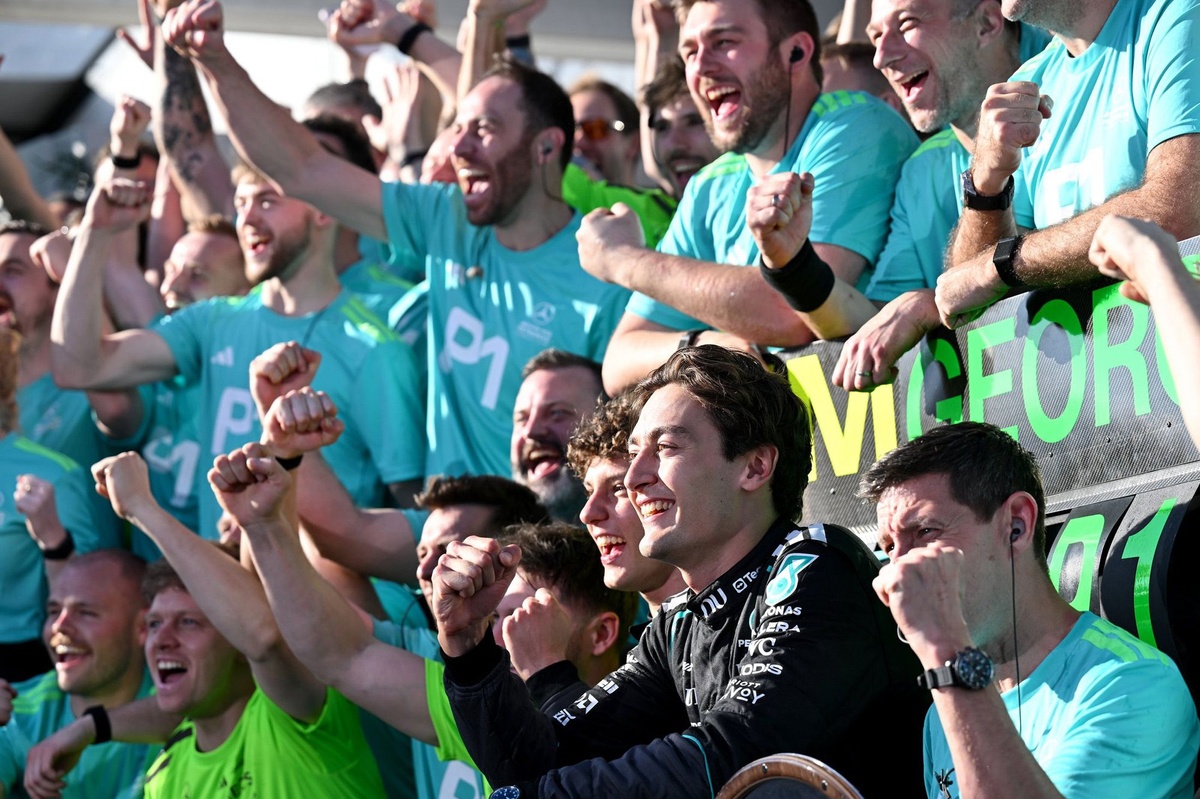
Russell Dominates Australian GP as Mercedes Shines, McLaren Grapples with Early Season Woes
The 2026 Formula 1 season kicked off with an electrifying Australian Grand Prix, delivering a spectacle of strategic brilliance, raw pace, and early-season drama. Mercedes’ George Russell emerged victorious, leading a dominant 1-2 finish for the Silver Arrows alongside teammate Kimi Antonelli. However, the joy for Mercedes contrasted sharply with the struggles of McLaren, whose home
F1 star Oscar Piastri endured a devastating DNS, while champion Lando Norris voiced strong criticism of the new machinery. This action-packed race at Albert Park set a compelling tone for what promises to be an unpredictable season under the sport's brand new technical regulations. The performance discrepancies immediately sparked discussions about which teams have truly mastered the new rulebook, and the challenges facing those still finding their feet.
Mercedes' Strategic Masterclass Secures a Dominant 1-2
The opening round of the 2026 championship saw Mercedes execute a flawless strategy, capitalising on crucial Virtual Safety Car (VSC) periods to seal a commanding one-two finish.
F1 star George Russell, starting from pole, initially found himself locked in an exhilarating battle with Ferrari’s Charles Leclerc, who surged from P4 to momentarily seize the lead. The early laps were a thrilling display of wheel-to-wheel racing, setting the stage for the strategic chess match that would unfold.
The turning point came when Red Bull’s Isack Hadjar retired from the race, prompting the deployment of the first VSC. Mercedes wasted no time, pitting both Russell and Antonelli for fresh tyres. Ferrari, however, chose to keep their drivers, Leclerc and Lewis Hamilton, out on track – a decision that would ultimately prove costly. Another VSC period followed shortly after, due to the retirement of Cadillac’s Valtteri Bottas, and once again, Ferrari opted against pitting. This disparity in strategy led to a fascinating tactical battle, as Mercedes’ early stops positioned them perfectly when the Ferrari duo eventually made their mandatory tyre changes.
When Leclerc and Hamilton finally pitted, Russell and Antonelli effortlessly reclaimed the front positions, showcasing the immense advantage gained from Mercedes’ bold and timely calls. The effectiveness of their one-stop strategy, expertly managed around the VSCs, underscored Mercedes' superior understanding of the new regulations and their ability to execute under pressure. For
F1 star Kimi Antonelli, securing P2 in his debut season race was a phenomenal achievement, solidifying Mercedes’ formidable start to the year. This decisive victory not only handed Russell maximum points but also sent a clear message to their rivals: Mercedes is back, and they mean business.
McLaren's Early Woes: Piastri's Devastating DNS
While Mercedes celebrated, the atmosphere in the McLaren garage was one of profound disappointment, particularly for home
F1 star Oscar Piastri, who suffered a bizarre crash on his reconnaissance lap, preventing him from even starting the race. The incident, occurring at Turn 4 on his way to the grid, saw Piastri lose control of his MCL40 and collide with the wall, resulting in significant damage to the car's front end.
Speaking after the devastating DNS (Did Not Start), Piastri revealed a complex interplay of factors contributing to the crash. "We had a bit of an issue out of the pits with no battery basically," Piastri explained. He cited cold tyres, the treacherous exit kerb, and crucially, an unexpected power surge. "I also had 100kW more power than I expected," he confessed, highlighting a torque spike that occurred when he shifted gears. This unexpected boost of power, combined with already cold tyres and the car being on the kerb, proved to be an uncontrollable mix for the young Australian.
Piastri elaborated further on the technical glitch, noting that he was at less throttle than in qualifying but still received 100kW more power than anticipated. This "unforeseen torque spike" is a significant concern for McLaren, especially given the new regulations cycle. For Piastri, missing his home race was particularly painful. "It hurt a lot," he admitted, expressing deep disappointment that such a scenario, tied to the new machinery, unfolded at such a crucial event. The incident highlighted the steep learning curve for teams and drivers alike as they grapple with the intricacies of the 2026 regulations.
The 2026 Regulations: A Shifting Power Dynamic and Driver Frustration
The Australian Grand Prix provided the first real glimpse into how the 2026 regulations have reshaped the F1 landscape. While Mercedes appears to have immediately found their stride, McLaren's early struggles indicate a significant shift in the balance of power. Reigning world champion Lando Norris, despite finishing fifth, was vocally critical of the new cars, labelling them "the worst" and stating he could "talk for hours" about their deficiencies. His P5 finish, a staggering 51 seconds behind Russell, further underscored McLaren's current predicament.
The challenges presented by the new regulations are clearly manifold. Teams are not only adjusting to altered aerodynamic principles but also grappling with complex power unit dynamics, as evidenced by Piastri's unexpected 100kW power surge. This early season demonstrates that adapting to such radical changes requires immense engineering prowess and an ability to quickly diagnose and rectify unforeseen issues.
Practical Insight for F1 Fans: When new regulations are introduced, it's common to see a reshuffle of the pecking order. Teams that truly understand and exploit the new rulebook gain an immediate advantage, while others spend the early part of the season playing catch-up. Pay close attention to how teams like McLaren address their car's shortcomings and how quickly they can bring upgrades that align with the new regulatory framework. The speed of development and adaptation will be key to who emerges as a championship contender.
Beyond the Podium: Key Takeaways and Future Implications
The
f1 star australian gp delivered an immediate narrative of contrasting fortunes. Mercedes’ commanding performance suggests they have unlocked significant potential from the new 2026 regulations, positioning them as early championship favourites. The strategic acumen displayed by their pit wall was a masterclass, proving that raw pace combined with intelligent decision-making is a potent formula for success.
For McLaren, the Australian GP served as a stark wake-up call. The technical issues plaguing Piastri's car and Norris's strong criticism of the new machinery point to fundamental challenges that need urgent attention. The team faces a monumental task to understand and mitigate the performance deficits and ensure driver confidence in the new car. The "worst car" sentiment from a champion like Norris is a serious indictment and suggests significant work is required back at the factory.
This early season race also highlighted the unpredictable nature of modern Formula 1, where strategic gambles and reliability issues can dramatically alter outcomes. The prevalence of VSC periods underscored the importance of dynamic race management and the agility required to react to unfolding events. As the season progresses, expect other teams to refine their understanding of the 2026 regulations, leading to tighter competition and potentially different winners. The Australian GP was just the beginning, setting the stage for what promises to be a thrilling and evolutionary season of Formula 1.
In conclusion, the 2026 Australian Grand Prix was a race of highs and lows. George Russell's dominant victory for Mercedes, coupled with Kimi Antonelli's stellar second place, firmly established the Silver Arrows as an early force. Conversely, McLaren's struggles, epitomised by Oscar Piastri's unfortunate DNS and Lando Norris's concerns about the new cars, highlight the significant challenges presented by the latest regulations. The season-opener delivered excitement and underlined the constant evolution of Formula 1, promising a captivating championship battle as teams adapt and evolve.