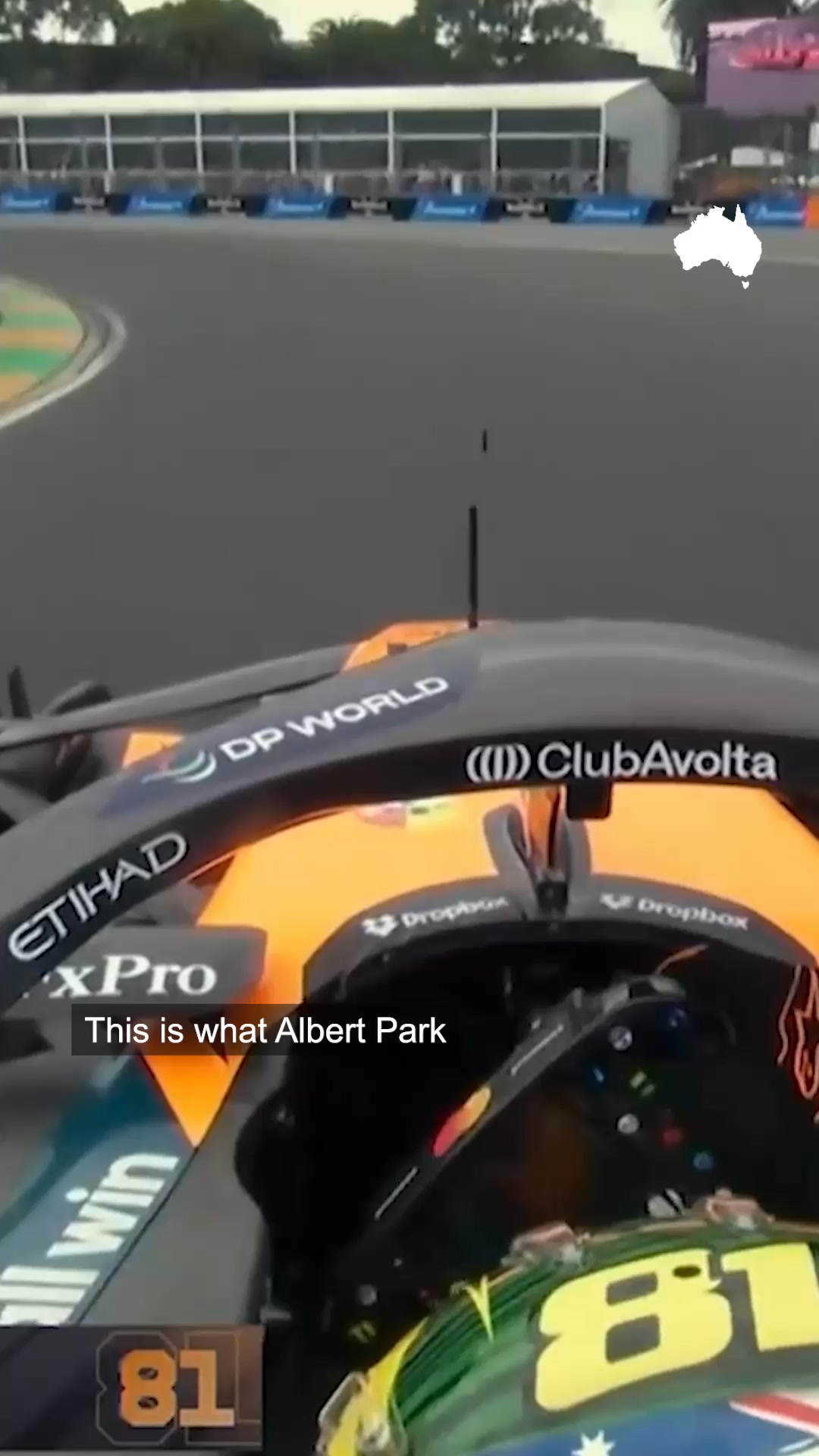
Oscar Piastri's Home Race Heartbreak: A Disastrous DNS at the Australian Grand Prix
The roar of the crowd, the anticipation of a home race, and the dreams of a podium finish – these are the powerful emotions that drive every
f1 star at their home Grand Prix. For Oscar Piastri, the highly-rated Australian talent, the 2026 Australian Grand Prix was meant to be a crowning moment in front of his adoring fans at Albert Park. Instead, it delivered an utterly devastating blow: a Did Not Start (DNS) due to a bizarre crash even before the race officially began. This heartbreaking incident not only robbed Piastri of a chance to compete but also shone a harsh spotlight on the new F1 regulations and their immediate, unforeseen impact on the sport's top competitors.
McLaren, once the reigning champions, appear to have endured a dramatic fall from grace early in the 2026 season. The sport's brand new regulations have significantly shifted the balance of power, with Mercedes notably emerging as an early frontrunner. While his teammate, Lando Norris, managed a P5 finish, a significant 51 seconds behind winner George Russell, it was Piastri who arguably had the most forgettable day in Melbourne. His crash on the reconnaissance laps set the tone for a weekend McLaren will be desperate to move on from.
Unpacking the Bizarre Crash: Cold Tyres, Kerbs, and an Unexpected Power Surge
The moments leading up to Piastri's crash were a cocktail of familiar racing hazards and an unexpected technical anomaly. As the young Australian navigated his MCL40 through the reconnaissance laps, he lost control at Turn 4, slamming into the wall and causing significant damage to the front end of his car. But what precisely led to this critical error for an F1 star known for his precision?
Speaking to Sky Sports F1’s Rachel Brookes after the incident, Piastri candidly revealed the contributing factors. "We had a bit of an issue out of the pits with no battery basically," he explained. While that was an initial concern, the crash itself was a "combination of a couple of things." He acknowledged the role of cold tyres and the exit kerb – common pitfalls on initial laps. However, the most critical element he cited was an unforeseen power surge: "I also had 100kW more power than I expected."
This unexpected burst of power, combined with the already tricky conditions, proved to be a recipe for disaster. Piastri elaborated, "Essentially I was at less throttle than what I was in qualifying… I actually got 100kW more power than if I would have been at full throttle." This "torque spike," as it's been described, sent his car into immediate wheelspin, and given his proximity to the kerb, he had no chance to recover. For any professional driver, such an unpredictable surge of power is a nightmare, especially when pushing the limits on cold rubber. "It’s obviously just disappointing and a scenario that shouldn’t be happening," Piastri concluded, echoing the sentiments of many within the paddock. The pain of a DNS at his home race clearly "hurt a lot," a sentiment relatable to any athlete denied their moment in the spotlight.
New F1 Regulations Under Fire: The Unforeseen Consequences
Piastri’s crash has thrust the new 2026 F1 regulations squarely into the spotlight, raising serious questions about their immediate impact on vehicle dynamics and driver safety. These regulations, designed to shake up the competitive order and potentially make racing closer, have clearly introduced complex new variables, particularly concerning power unit management and delivery.
The "torque spike" Piastri experienced is a prime example of the kind of unforeseen consequence that can arise with drastic rule changes. When a driver expects a certain power output at a given throttle input, and instead receives an additional 100kW – roughly 134 horsepower – the car’s behaviour changes dramatically. This isn't just a matter of performance; it’s a critical safety concern, especially on cold tyres and compromised track positions.
Lando Norris, Piastri's McLaren teammate and a world champion himself, has been a vocal adversary of the new machinery, stating he could "talk for hours" about how bad the new cars are and labelling them "the worst." While Norris’s comments might also stem from McLaren's comparative lack of pace, they certainly highlight a broader dissatisfaction within the team regarding the characteristics of the 2026 challengers under the new rules. The intricate dance between engine manufacturers, chassis designers, and software engineers to optimise power delivery under these new regulations is clearly proving challenging. The incident underscores the immense pressure on teams to not only find speed but also to master the nuanced and sometimes unpredictable behaviour of these cutting-edge power units.
Beyond Piastri: McLaren's Early Season Struggles and the Shifting Landscape
Oscar Piastri’s unfortunate incident was not an isolated blip but rather a stark symbol of McLaren's broader struggles in the early stages of the 2026 F1 season. The reigning champions, who concluded the previous season on a high, have found themselves grappling with the implications of the new regulations, which appear to have fundamentally altered the competitive pecking order.
Lando Norris's P5 finish, while respectable on paper, tells a significant story of the team's current deficit. Finishing 51 seconds behind race winner George Russell is an enormous gap in Formula 1 terms, suggesting that McLaren is not just a few tenths off the pace, but potentially in a different league to the frontrunners. This stark performance gap, combined with Piastri's mechanical-induced crash, paints a concerning picture for the Woking-based outfit.
The reference context clearly states that the new regulations have moved the "balance of power in favour of Mercedes." This shift was vividly demonstrated at the
Australian Grand Prix, where Mercedes secured a dominant 1-2 finish. Such a dramatic change in fortunes from one season to the next highlights the profound influence of regulatory overhauls. For McLaren, this means an intense development race lies ahead, not just to understand and mitigate issues like Piastri's power surge but to unlock fundamental performance from their MCL40 chassis under the new rules. Teams will be pouring over telemetry, simulator data, and driver feedback, seeking every incremental gain to bridge the gap.
The Mercedes Masterclass: A Glimpse into the New Era's Frontrunners
While McLaren endured a challenging weekend, Mercedes demonstrated a masterful understanding of the new regulations, culminating in a spectacular 1-2 finish at the Australian Grand Prix. George Russell claimed victory, leading home his teammate Kimi Antonelli, securing a dominant start to their 2026 campaign ahead of the Ferrari duo.
This strong performance wasn't just about raw pace; it also highlighted Mercedes' strategic prowess. Their one-stop strategy, executed perfectly during a Virtual Safety Car (VSC) period triggered by Red Bull's Isack Hadjar, proved decisive against Ferrari's two-stop approach. The contrast between Mercedes' seamless execution and McLaren's early-season woes underscores how effectively different teams have adapted to the new regulatory landscape. Mercedes' ability to manage tyres, optimise power unit usage, and make astute strategic calls suggests they have found an early sweet spot with the 2026 rules, positioning them as formidable contenders in this new era.
What This Means for the Future: Adapting to the New F1 Era
The 2026 Australian Grand Prix, particularly Oscar Piastri's unfortunate home race exit, serves as a stark reminder of the inherent unpredictability and intense learning curve that accompanies significant regulation changes in Formula 1. For teams and drivers alike, mastering these new machines is a monumental task, and incidents like Piastri's underscore the immediate challenges.
**Key Implications for the Future:**
* **Complex Learning Curve:** The transition period for new regulations is rarely smooth. Teams must quickly adapt their design philosophies, engine mappings, and operational strategies. The "torque spike" issue highlights the immense complexity involved in calibrating power units under new constraints.
* **Software and AI Dominance:** Modern F1 cars are as much about software as they are about aerodynamics and mechanical grip. Sophisticated control systems are crucial to manage the intricate power delivery from hybrid units. Expect intense development in this area to prevent unpredictable behaviour.
* **Driver Adaptation:** Drivers must learn to 'feel' the new cars, understanding their unique quirks and limits. Piastri's experience emphasizes that what worked in qualifying might not apply in less optimal conditions (cold tyres, part-throttle, kerbs) with the new power characteristics.
* **Potential for More Incidents:** As drivers push the limits of unfamiliar machinery, especially in high-pressure situations, there might be a higher propensity for errors or unexpected car behaviour, leading to more dramatic races.
* **FIA Oversight:** Incidents like Piastri's will prompt the FIA to closely monitor power unit behaviour and safety implications, potentially leading to clarifications or minor adjustments if systemic issues arise.
**Actionable Advice & Outlook:**
* **For Teams:** Prioritise extensive simulator work, rigorous data analysis, and rapid software iteration cycles. Driver feedback will be invaluable in pinpointing and resolving power delivery anomalies. McLaren, in particular, will need to go back to the drawing board to understand how to unlock consistent performance and reliability.
* **For Drivers:** Heightened awareness and adaptability are paramount. Clear, detailed communication with engineers about power delivery characteristics will be vital to build confidence and extract performance safely.
* **For Fans:** Brace for a dynamic and potentially unpredictable season. The shifting balance of power promises thrilling battles, and the challenges posed by the new regulations could lead to upsets and unexpected heroes as teams and drivers grapple with the new era of F1.
The heartbreak experienced by the
f1 star at the Australian GP serves as a poignant reminder that F1 remains a sport of razor-thin margins and relentless innovation, where even the slightest miscalculation or unexpected technical quirk can have profound consequences.
**Conclusion**
Oscar Piastri's disastrous DNS at his home Australian Grand Prix was a bitter pill for the young F1 star and a stark indicator of the challenges posed by the new 2026 regulations. His bizarre crash, attributed to a combination of cold tyres, kerbs, and an unexpected 100kW power surge, underscored the unpredictable nature of the latest generation of F1 machinery. While Mercedes revelled in a dominant 1-2 finish, McLaren's early-season struggles, including Piastri's incident and Norris's significant deficit, highlight a dramatic shift in the competitive landscape. As teams race against time to understand and master these complex new rules, the season ahead promises to be a thrilling, albeit challenging, spectacle of engineering prowess and driver skill, where adaptation will be the ultimate key to success.