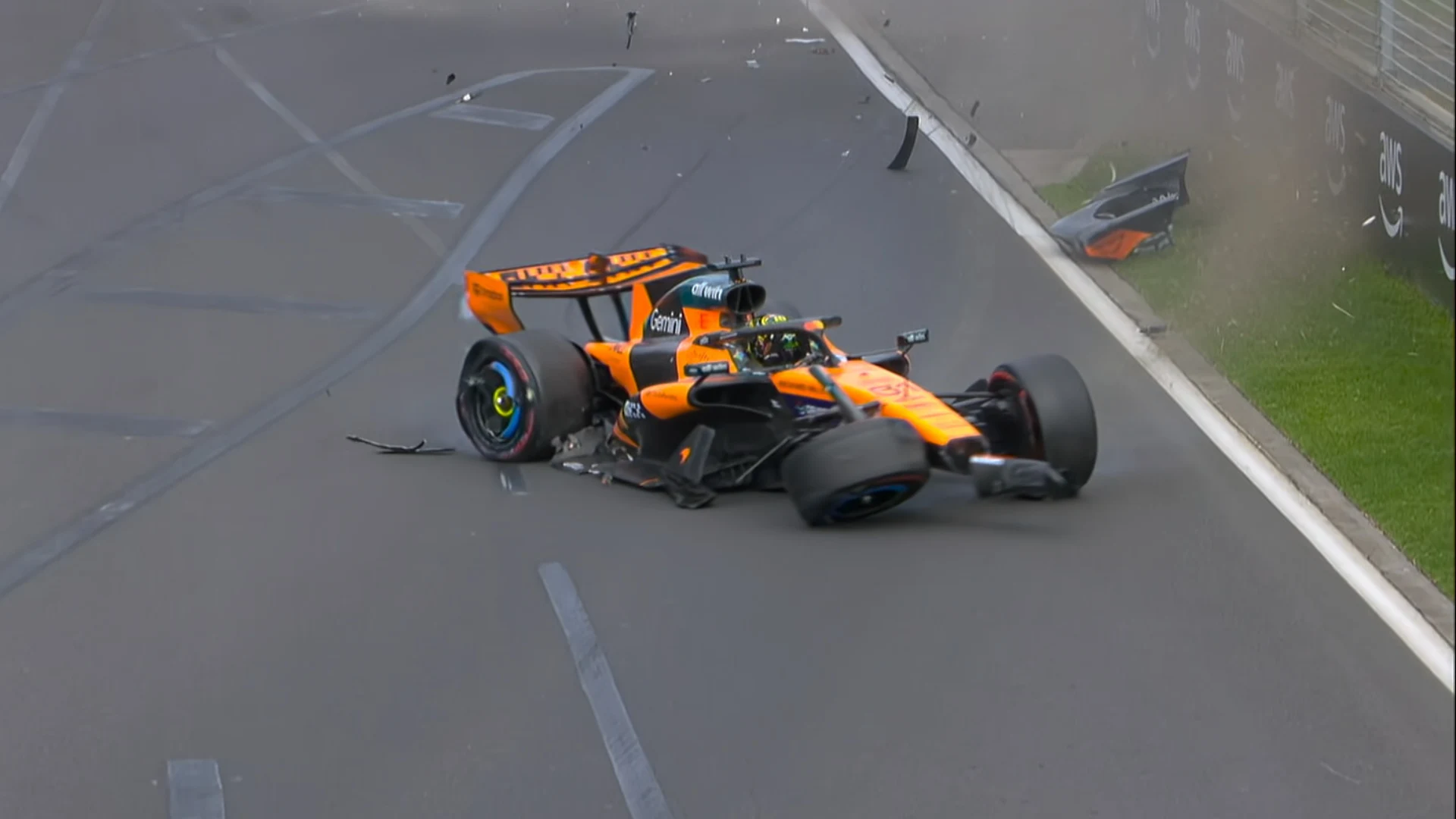
Piastri's Australian GP Crash: The 100kW Power Surge Revealed – A Deep Dive into F1's New Era Challenges
The Australian Grand Prix, Oscar Piastri's home race, was meant to be a weekend of glory and high-octane excitement for the young F1 star. Instead, it delivered a moment of perplexing drama that saw the McLaren driver unable to even start the race. His devastating Did Not Start (DNS) entry following a crash on his reconnaissance lap sent shockwaves through the paddock and left fans bewildered. Now, the full story behind the incident has emerged, with Piastri himself revealing a critical factor: an unexpected 100kW power surge that caught him completely off guard, highlighting the complex challenges introduced by F1's new technical regulations.
Unpacking the Mystery: Piastri's Devastating DNS at Albert Park
Expectations were sky-high for Oscar Piastri, the celebrated Australian talent, as he prepared to race on home soil at Melbourne's iconic Albert Park circuit. The atmosphere was electric, but the dream weekend quickly turned into a nightmare. During his reconnaissance laps, a crucial phase where drivers familiarise themselves with track conditions and car settings before the race start, Piastri lost control of his McLaren MCL40 at Turn 4. The subsequent impact with the wall inflicted significant damage to the front end of his car, putting an abrupt and heartbreaking end to his Grand Prix aspirations before they had even truly begun.
The incident immediately sparked questions and concerns. How could an experienced f1 star at his home Australian GP suffer such a calamitous error on a seemingly routine lap? For Piastri, the disappointment was palpable. Speaking to Sky Sports F1’s Rachel Brookes, he candidly described his DNS as "devastating" and confessed the inability to race in front of his home crowd "hurt a lot." This wasn't merely a mechanical failure; it was a complex interplay of factors, as Piastri would soon explain, revealing the hidden technical curveball that contributed to his premature exit.
The Cold Hard Facts: What Piastri Revealed About the Crash
After the initial shock, Piastri provided a remarkably transparent account of the incident. He pinpointed a combination of elements that conspired against him. "We had a bit of an issue out of the pits with no battery basically," he began, indicating an initial energy management problem. However, the actual crash was a multifaceted event. Piastri humbly admitted that a "large element of the cause was just me," acknowledging the inherent risks of cold tyres and navigating the exit kerb.
But crucially, he added, "I also had 100kW more power than I expected so, you put all of those together and unfortunately, it ends in the result we got." This revelation was significant. Piastri elaborated on this unexpected "torque spike," explaining, "Essentially I was at less throttle than what I was in qualifying… I actually got 100kW more power than if I would have been at full throttle." This bizarre scenario meant his car delivered far more power than requested, at precisely the wrong moment, leading to immediate wheelspin on an already tricky part of the track. It was a perfect storm of challenging conditions amplified by an unforeseen technical anomaly, leaving the young f1 star reeling from a bizarre incident at the Australian GP.
The Technical Deep Dive: Understanding the 100kW Power Surge
In the high-stakes world of Formula 1, where margins are measured in milliseconds and millimeters, an unexpected 100kW power surge is nothing short of an engineering nightmare. To put 100 kilowatts into perspective, it's roughly equivalent to the power output of a small family car's engine being unleashed suddenly and without warning in an F1 machine already producing over 1000 horsepower. This isn't just a minor blip; it's a monumental, instantaneous jolt of energy that can destabilize a car instantly.
The cause of such an anomaly likely lies deep within the intricate software and hardware of modern F1 hybrid power units, especially under the sport's new regulations cycle. These cars combine a traditional Internal Combustion Engine (ICE) with sophisticated Energy Recovery Systems (ERS) – harvesting energy from braking and exhaust heat. Managing the seamless interplay between these components is a monumental task. A "torque spike" or unexpected power delivery can occur due to:
- Software Glitches: An error in the control software that dictates how the ERS deploys power, potentially misinterpreting driver input or environmental conditions.
- Calibration Issues: The car's engine maps or ERS deployment strategies not being perfectly calibrated for specific conditions, such as cold tyres or a reconnaissance lap where drivers might be less aggressive on the throttle.
- Regulation Specifics: The new regulations might have introduced nuances in power unit architecture or energy deployment rules that teams are still grappling with. Piastri's own comment that "everything kind of reacted the way it should within the rules" suggests this might be an inherent, albeit undesirable, characteristic of how the new systems are designed to operate under certain conditions, rather than a catastrophic malfunction.
For a driver, a sudden burst of wheelspin, especially when on a kerb, is almost impossible to recover from. It demands immediate, precise counter-steer and throttle modulation – skills even an f1 star australian gp contender like Piastri would struggle with against such an unpredictable force. This incident underscores the immense complexity beneath the sleek carbon fibre shells and the razor-thin margins between control and chaos in modern F1.
Broader Implications: New F1 Regulations Under Scrutiny
Piastri's unfortunate incident is not an isolated event but rather appears to be a symptom of a larger challenge facing teams under Formula 1's evolving regulatory landscape. The sport's "brand new regulations," which have significantly altered car design and power unit dynamics, have been a subject of contention and discussion among drivers and engineers alike.
Piastri's teammate, world champion Lando Norris, has been a vocal critic of the new machinery, famously stating he could "talk for hours" about how "bad" the new cars are. While Norris finished fifth in the Australian GP, 51 seconds behind winner George Russell, his comments suggest a widespread difficulty in taming these complex machines. The shift in the "balance of power in favour of Mercedes," as noted in early assessments, further indicates that not all teams are adapting equally well to the new technical directives.
This raises critical questions about driver confidence and the safety implications of such unpredictable power delivery. When a driver cannot trust their car's throttle response, it impacts their ability to push the limits safely and consistently. McLaren, a team with high aspirations, faces immense pressure to swiftly analyse and rectify these issues. The incident highlights the steep learning curve imposed by new regulations, where innovative solutions can sometimes introduce unforeseen complexities. For a deeper look into the team's struggles and the impact of the new rules, read about Oscar Piastri's Home Race Heartbreak: New F1 Regulations Under Fire.
McLaren's Early Season Struggles and the Road Ahead
The Australian Grand Prix was a mixed bag for McLaren. While Norris secured a respectable P5, the gap to the frontrunners, especially winner George Russell, underscored the challenges the team is facing. Piastri's DNS compounded the sense of an early-season struggle for a team accustomed to fighting at the sharp end of the grid. This particular incident, involving an unpredictable power surge, points towards a deeper engineering puzzle that McLaren's strategists and technical teams must solve with utmost urgency.
The road ahead for McLaren will involve intensive data analysis, simulations, and potentially software updates to prevent similar incidents. Ensuring consistent and predictable power delivery is fundamental for driver confidence and competitive performance. This early setback will undoubtedly fuel their determination to understand the nuances of the new regulations and fine-tune their MCL40 to extract its full potential, ensuring their drivers, including their promising f1 star at the Australian GP, can compete without such unexpected hindrances.
Beyond the Crash: The Australian GP's Drama Unfolds
While Piastri's heart-wrenching exit was a significant storyline, the Australian Grand Prix itself was far from uneventful. George Russell clinched a dominant victory, leading his Mercedes teammate Kimi Antonelli to a remarkable 1-2 finish. The race was an action-packed affair, filled with strategic battles and unforeseen turns. Charles Leclerc of Ferrari initially challenged Russell for the lead, setting the stage for an intense fight. Strategic decisions under Virtual Safety Car (VSC) periods, triggered by retirements from Red Bull’s Isack Hadjar and Cadillac’s Valtteri Bottas, played a crucial role in shaping the final outcome, with Mercedes making their one-stop strategy work flawlessly.
This backdrop of fierce competition and tactical masterstrokes only served to amplify the bitter disappointment for Piastri and McLaren. As the rest of the field battled for glory, an `f1 star australian gp` competitor was left on the sidelines, a stark reminder of the fine line between success and unforeseen mechanical or software complexities. For a full recap of the race and Mercedes' triumph amidst McLaren's early struggles, see Russell Wins Action-Packed Australian GP Amidst McLaren's Early Struggles.
Conclusion
Oscar Piastri's Australian Grand Prix crash, initially a baffling mystery, has now been clarified by the driver himself: a sudden, unexpected 100kW power surge was a critical factor in his devastating DNS. This incident serves as a potent reminder of the intricate technical challenges posed by Formula 1's new regulations, where complex hybrid power units can yield unpredictable behaviour. While deeply disappointing for the young f1 star at his home Australian GP, it highlights the constant battle teams and drivers face to understand, tame, and master the cutting-edge technology that defines modern F1. As the season progresses, all eyes will be on McLaren to address these issues and on Piastri to bounce back, demonstrating the resilience and skill that makes him one of the sport's most exciting talents. The incident underscores that in F1, the drama extends far beyond the race itself, into the very heart of engineering innovation and the relentless pursuit of perfection.